How to Track the Value of Your Gold and Silver
By Maxence Roux· Published on · Updated on
A few inherited coins, a bar, family jewelry: many people own gold or silver without knowing exactly what they have or how much it is worth. Tracking your collection is not complicated. You just need to record the right information once, then keep it up to date. Here is the method.

A few inherited coins, a bar, family jewelry: many people own gold or silver without knowing exactly what they have or how much it is worth. Tracking your collection is not complicated. You just need to record the right information once, then keep it up to date. Here is the method.
Indicative values and examples only. This content is for information and does not constitute investment advice.
Why track your collection?
- Know what you own, item by item.
- Know its metal value at any time, without redoing the calculations.
- Be ready when you sell, so you can compare offers with the right information.
- Keep a useful record for an inheritance, insurance, or taxes.
Step 1: take inventory
Gather all your items and record the following for each one:
| Information | Example |
|---|---|
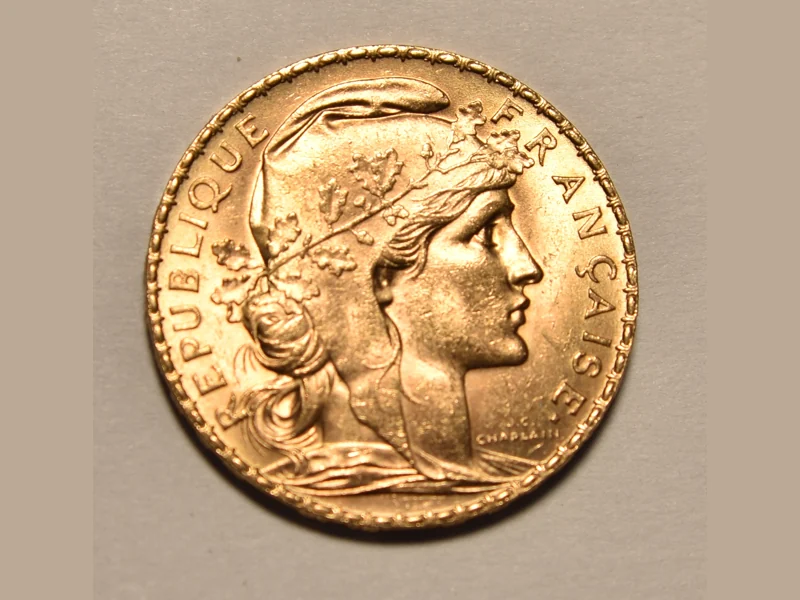
| Item name | Napoleon 20 francs |
| Type | Coin, bar, or jewelry |
| Metal | Gold, silver, platinum, or palladium |
| Quantity | 3 |
| Weight per unit | 6.45 g |
| Fineness (purity) | 900 ‰ |
| Purchase date | March 2018 |
| Price paid, including fees | Amount on the invoice |
Keep identical items bought on different dates or at different prices separate: this makes calculations easier when you sell part of them.
Step 2: find the correct weight and fineness
- For coins, use official specifications. Our article on the most common gold coins gives the weight and fineness of the American Eagle, Maple Leaf, Krugerrand, Philharmonic, Sovereign, and Napoleon.
- For bars, weight and fineness appear on the bar and its certificate.
- For jewelry, look for the hallmark (“750” for 18K gold, “585” for 14K gold) and weigh the items. Exclude the weight of stones and steel clasps. Our hallmark guide helps you recognize them.
Step 3: calculate metal value
An item's metal value is calculated as follows:
Metal value = weight × fineness ÷ 1,000 × quantity × price of pure metal per gram
Example using a hypothetical price of $100 per gram of pure gold (an example figure only):
| Item | Calculation | Pure gold | Metal value |
|---|---|---|---|
| 3 Napoleons | 6.45 × 0.9 × 3 | 17.4 g | $1,740 |
| 10 g 18K chain | 10 × 0.75 | 7.5 g | $750 |
| Total | 24.9 g | $2,490 |
For the detailed method, read our guide to the 18K gold price per gram.
Step 4: distinguish metal value from resale price
Metal value is an estimate, not a guaranteed price. When you sell, a professional generally offers less because they deduct their fees and margin. Conversely, some rare coins are worth more than their gold weight because of their collectible value. Keep these two concepts separate in your notes.
Step 5: keep your records up to date
- After a purchase: add the item with its invoice.
- After a sale: record the date, quantity sold, amount received, and fees. If you sell part of a batch, keep the rest in your inventory.
- Once a year: check that your records match what you actually own.
Keep your invoices and certificates in a safe place, with a digital copy: they prove your items' origin and purchase price.
Spreadsheet or app?
A simple spreadsheet is enough for a small collection. But you need to look up the metal price each time and redo the calculations. An app such as Metalstat automatically calculates each item's metal value using real prices, updated throughout the day and shows how your collection changes over time.
Notes for readers worldwide
Examples use US dollars. The formulas work in any currency, provided purchase costs, metal quotes, and sale proceeds use the same currency. Metalstat lets you display values in USD, EUR, MAD, GBP, or CHF; not every currency is available in the app.
Gold prices are often quoted per troy ounce. One troy ounce is approximately 31.1035 g: divide the price per troy ounce by 31.1035 to obtain the price per gram, then apply fineness and quantity. Do not use an ordinary ounce.
Gold purity is expressed in karats (K). 14K is common in the United States, 18K is widely used in Europe, and 22K–24K is popular in parts of Asia and the Middle East; practices vary by market and product. International marks include “750” or “18K” and “585” or “14K”. An eagle's head is a French hallmark example, not a worldwide requirement, and a mark alone does not prove authenticity.
Tax, identification, payment, and selling rules vary by country and, in the United States, by state. Check with your local tax administration and other relevant authorities, or consult a qualified local professional. Do not assume a rule from another country applies to your sale.
Frequently asked questions
Should I record every coin separately? No. Identical coins bought together at the same price can share one entry. Separate them only if their purchase dates or prices differ.
How can I find the fineness of jewelry without a hallmark? Without a readable hallmark, only a professional can determine the fineness with certainty. In the meantime, record “unknown fineness” rather than an assumed value.
How often should I update my collection's value? Metal value changes with the quote, but there is no need to watch it every day. An app updates it automatically. The records themselves should be updated after every purchase or sale.
Should I keep my invoices? Yes. An invoice proves the purchase date and price. It is useful for resale, inheritance, or taxes.
Does a higher gold price mean I have made money? It increases your collection's estimated metal value, but you only realize a profit when you sell. To learn how to calculate it, read our guide to real profit.
In summary
To track your gold and silver: take inventory, record each item's weight, fineness, and purchase price, calculate its metal value, and update your records whenever something changes. With Metalstat, your collection's value is calculated automatically, and you keep everything in one place.
Track your gold and silver portfolio with Metalstat
Keep your objects and purchase records together, with clearly identified indicative metal estimates.
Create your account