How to Sell Gold Without Being Misled: 10 Tips
By Maxence Roux· Published on · Updated on
Old jewelry, inherited coins, a bar bought years ago: selling gold can bring in a substantial amount, provided you approach it properly. With offers varying widely between buyers and some questionable practices, it is better to arrive prepared. Here are ten tips for selling your gold at a fair price.
Old jewelry, inherited coins, a bar bought years ago: selling gold can bring in a substantial amount, provided you approach it properly. With offers varying widely between buyers and some questionable practices, it is better to arrive prepared. Here are ten tips for selling your gold at a fair price.
Indicative values and examples only. This content is for information and does not constitute investment advice or tax advice.
1. Identify what you are selling
First, sort your objects:
- jewelry, whose value mainly depends on its pure gold weight;
- coins, which may be worth more than their gold weight if rare or sought after by collectors;
- bars and small bars, generally accompanied by a certificate.
Each category is assessed differently and does not always suit the same buyer.
2. Check each object's fineness
Fineness indicates the proportion of pure gold. Look for hallmarks: “750” or “18K” for 18 karat gold, “585” or “14K” for 14 karat gold. In France, 18 karat gold bears an official hallmark shaped like an eagle's head. Our hallmark guide helps you recognize them.
Then separate your objects by fineness: a reputable buyer weighs and assesses them separately.
3. Weigh your objects
Use a precision scale, accurate to one hundredth of a gram if possible. For jewelry set with stones, remember that stones, steel clasps and springs are not gold: the actual gold weight is lower than the total weight.
4. Calculate metal value before visiting a buyer
This is the most important tip. Metal value is calculated as follows:
Metal value = weight (in grams) × fineness ÷ 1,000 × pure gold price per gram
Example using a hypothetical price of $100 per gram of pure gold (an example figure only): a 20-gram bracelet in 18 karat gold contains 20 × 0.75 = 15 grams of pure gold, giving an indicative metal value of $1,500.
For a calculation using real prices, updated throughout the day, use our gold calculator. For the detailed method, see our guide to the 18 karat gold price per gram.
5. Understand that the buyback price will be lower than metal value
A professional will not pay you the full metal value: they need to cover melting and refining costs and take a margin. The difference varies widely between buyers. Knowing the metal value lets you measure this difference and identify an unusually low offer.
6. Compare at least three offers
Offers for the same object can vary considerably. Request at least three estimates from different professionals: specialist gold buyers, jewelers or coin dealers for coins. Ask for a written quote showing the accepted weight, fineness and offered price.
7. For coins, look beyond the gold value
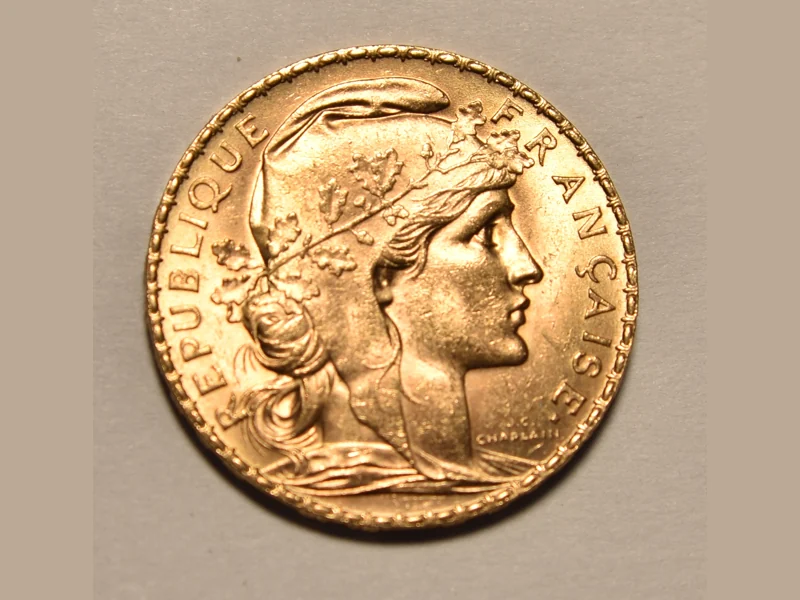
Some coins are worth more than their gold weight because of their rarity, year or condition. This is called a premium. For old or unusual coins, ask a numismatist's opinion. Above all, do not clean your coins: cleaning can cause them to lose a large part of their collector value.
8. Watch out for common pitfalls
- Traveling buyers, home “gold-buying parties” or temporary stands: it is difficult to compare offers and return if there is a problem.
- Weighing out of your sight: insist that your objects are weighed in front of you on a visible scale.
- “All-inclusive” offers that mix different finenesses without distinguishing them.
- Pressure to sell immediately: a serious offer remains valid long enough to compare it.
- Postal shipments without insurance or a written price commitment.
9. Prepare your documents
Keep your purchase invoices, certificates, or inheritance documents to document origin and acquisition date. Identification requirements and permitted payment methods vary by country and state; ask the buyer for written terms and check with local authorities.
Identification, payment and tax rules vary by country; check with your local authorities.
10. Find out about taxes
Tax and selling rules vary by country and state. This calculation is before tax. Check with your local tax administration or a qualified professional before selling.
Track your gold's value with Metalstat
The best time to know your gold's value is before you need it. Record your jewelry, coins and bars in Metalstat with their weight, fineness and purchase price. You will know their indicative metal value using real prices, updated throughout the day and arrive prepared when you decide to sell.
Notes for readers worldwide
Examples use US dollars. The formulas work in any currency, provided purchase costs, metal quotes, and sale proceeds use the same currency. Metalstat lets you display values in USD, EUR, MAD, GBP, or CHF; not every currency is available in the app.
Gold prices are often quoted per troy ounce. One troy ounce is approximately 31.1035 g: divide the price per troy ounce by 31.1035 to obtain the price per gram, then apply fineness and quantity. Do not use an ordinary ounce.
Gold purity is expressed in karats (K). 14K is common in the United States, 18K is widely used in Europe, and 22K–24K is popular in parts of Asia and the Middle East; practices vary by market and product. International marks include “750” or “18K” and “585” or “14K”. An eagle's head is a French hallmark example, not a worldwide requirement, and a mark alone does not prove authenticity.
Tax, identification, payment, and selling rules vary by country and, in the United States, by state. Check with your local tax administration and other relevant authorities, or consult a qualified local professional. Do not assume a rule from another country applies to your sale.
Frequently asked questions
Where can I sell gold for the best price? No place is always better than another. Compare several professionals (specialist buyers, jewelers or coin dealers for coins), request written quotes and compare them with the metal value you have calculated.
How much will a buyer pay compared with the gold price? The buyback price is generally lower than metal value because it includes refining costs and the buyer's margin. The difference varies between professionals, which is why comparison is useful.
Should I sell broken jewelry? Yes, a broken piece contains as much gold as an intact one. For purchases by weight, only the amount of pure gold matters. However, jewelry signed by a major house may be worth more if it can be repaired.
Should I clean my jewelry or coins before selling? For jewelry, it is not necessary. For coins, absolutely avoid it: cleaning can reduce their collector value.
Do I need an invoice to sell gold? It is not always mandatory, but an invoice, certificate or inheritance document can be useful to prove origin and acquisition date, especially for tax purposes.
In summary
To sell your gold without being taken advantage of: identify and weigh your objects, calculate their metal value, compare at least three written offers, have them weighed in front of you, seek an expert assessment for old coins and find out about taxes. With Metalstat, you know your collection's value and negotiate with an informed understanding.
Track your gold and silver portfolio with Metalstat
Keep your objects and purchase records together, with clearly identified indicative metal estimates.
Create your account